Mistbound Revealed: Guild Wars Card Game Coming to PC and Mobile
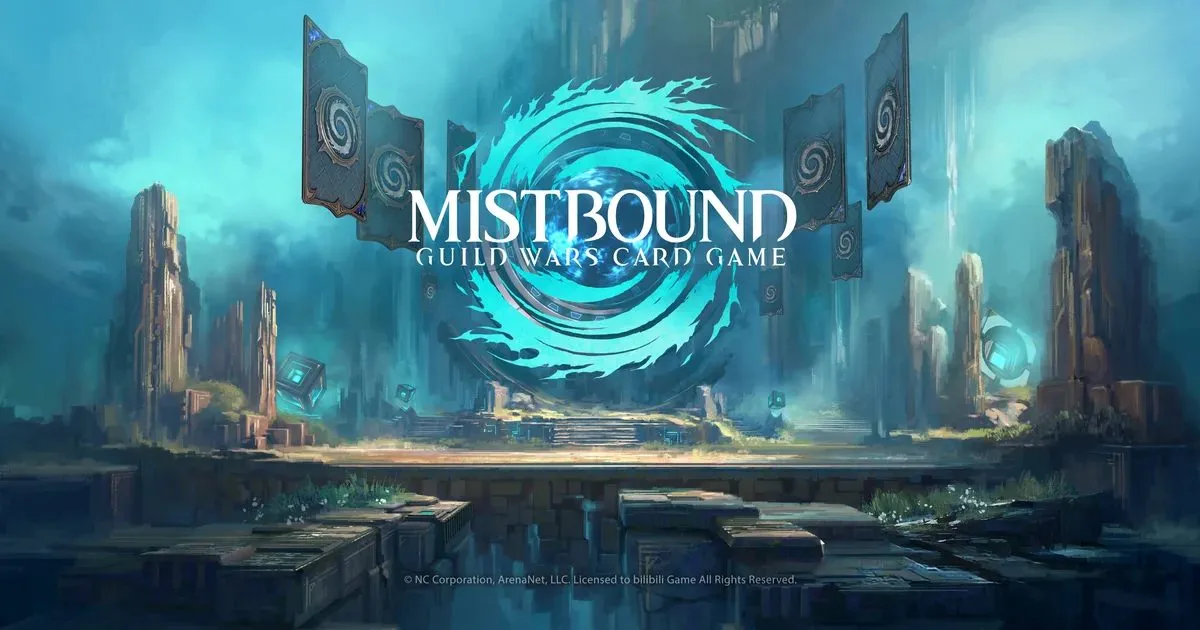
Guild Wars is finally stepping into the card game arena with Mistbound: Guild Wars Card Game, a newly revealed free-to-play title for PC and mobile that mixes deck-building with tactical grid-based combat. Set in the beloved Guild Wars universe, the game promises familiar characters, commander-based strategy, and a fresh movement system that could help it stand out in a crowded CCG market, though big questions remain about monetization and long-term player trust.
For longtime Guild Wars fans, this reveal feels a little surprising, but also strangely overdue. ArenaNet’s MMO universe has always had strong worldbuilding, iconic professions, and memorable factions, all of which seem like a natural fit for a collectible card game. Yet until now, the franchise had never fully committed to that format. Mistbound changes that, and it does so with a concept that sounds more ambitious than a simple digital card battler.
The biggest hook right away is the battlefield itself. Instead of cards just being played into static lanes or dropped onto a board with limited interaction, Mistbound uses a 5x3 grid where positioning matters. Players can move cards in multiple directions during a turn, which opens the door to mechanics like flanking, knockbacks, repositioning, and other tactical plays. That one idea alone gives the game a very different identity compared to more traditional CCGs.
For players who enjoy strategy games as much as card games, this could be the feature that makes Mistbound worth watching. A lot of digital card games live and die by how clearly they separate themselves from genre giants. If Mistbound can successfully blend deck-building with spatial tactics, it may carve out a real niche rather than feeling like another fantasy card game with a famous logo attached.
The commander system also sounds like a strong fit for the Guild Wars setting. Players will choose a commander for battle, and each one comes with unique passive traits and active abilities. Even better, their playstyles are said to be inspired by Guild Wars 2 professions, which should immediately click with MMO veterans. That means fans may see commanders that echo the feel of professions like Guardian, Necromancer, Mesmer, or Elementalist, giving the game a layer of flavor beyond just card art and lore references.
That connection to the MMO is likely going to be one of Mistbound’s biggest selling points. Fans do not just want a generic card game wearing Guild Wars clothes. They want something that feels tied to Tyria, its heroes, and its class identity. Bringing recognizable characters into the roster as commanders is a smart move, especially if the game leans hard into faction themes, profession mechanics, and signature abilities that reflect the source material.
There is also the matter of who is making and publishing the game, and that part is definitely unusual. ArenaNet has licensed the Guild Wars IP, bilibili is publishing the title, and development is being handled by Korean studio NC, formerly known as NCSoft. That is a pretty unexpected combination, and it adds a layer of curiosity to the whole project. On one hand, partnerships like this can bring fresh ideas and broader market reach. On the other, fans may naturally wonder how closely the final product will align with what they expect from Guild Wars.
The announcement also mentions both single-player and PvP modes, which is encouraging. A healthy card game needs more than competitive matchmaking if it wants to build a broad audience. Solo content can help players learn mechanics, enjoy the world at their own pace, and stick around even when they are not in the mood to climb a ladder. If Mistbound includes meaningful PvE encounters, narrative battles, or progression outside of ranked play, it could become much more than just a side project for the franchise.
Another detail that should please fans is the inclusion of music from original Guild Wars composers, along with voice acting. That kind of presentation matters. Card games can sometimes feel abstract or disconnected from their universes, but strong audio and character delivery can go a long way toward making every match feel like part of a larger world. For a setting as beloved as Guild Wars, atmosphere is not just a bonus. It is part of the appeal.
Still, for all the exciting ideas in the reveal, there is one issue hanging over everything else: monetization. The game is free to play, and in the CCG space, that can mean anything from fair and welcoming to frustrating and expensive. How cards are earned, how quickly decks can be built, and whether paying players gain too much of an advantage will all shape the game’s future. Fans have seen enough card games stumble here to know that even great mechanics can be dragged down by a bad economy.
That concern feels especially relevant because Guild Wars players tend to be sensitive to monetization decisions. The franchise has built a reputation around avoiding some of the worst MMO business practices, so expectations are naturally higher when a new Guild Wars-related game appears. If Mistbound wants to win over skeptics, it will need to show that its systems reward time and skill without leaning too hard on predatory design.
Right now, there is no release date, which means fans are still in the early speculation phase. But even at this stage, Mistbound looks like more than a random franchise spinoff. The movement-based combat, profession-inspired commanders, and tactical board design give it a promising foundation. Whether that foundation turns into a genuinely great card game will depend on execution, balance, and how respectful the game is of players’ time and wallets.
For now, Mistbound: Guild Wars Card Game is one of the more interesting surprise reveals in the fantasy strategy space. It has the name recognition, the world, and at least one genuinely intriguing gameplay twist. If it can deliver on those ideas while keeping monetization fair, Guild Wars fans may finally get a card game worthy of Tyria.