Assassin's Creed Unity Was Misunderstood, Says Former Ubisoft Dev
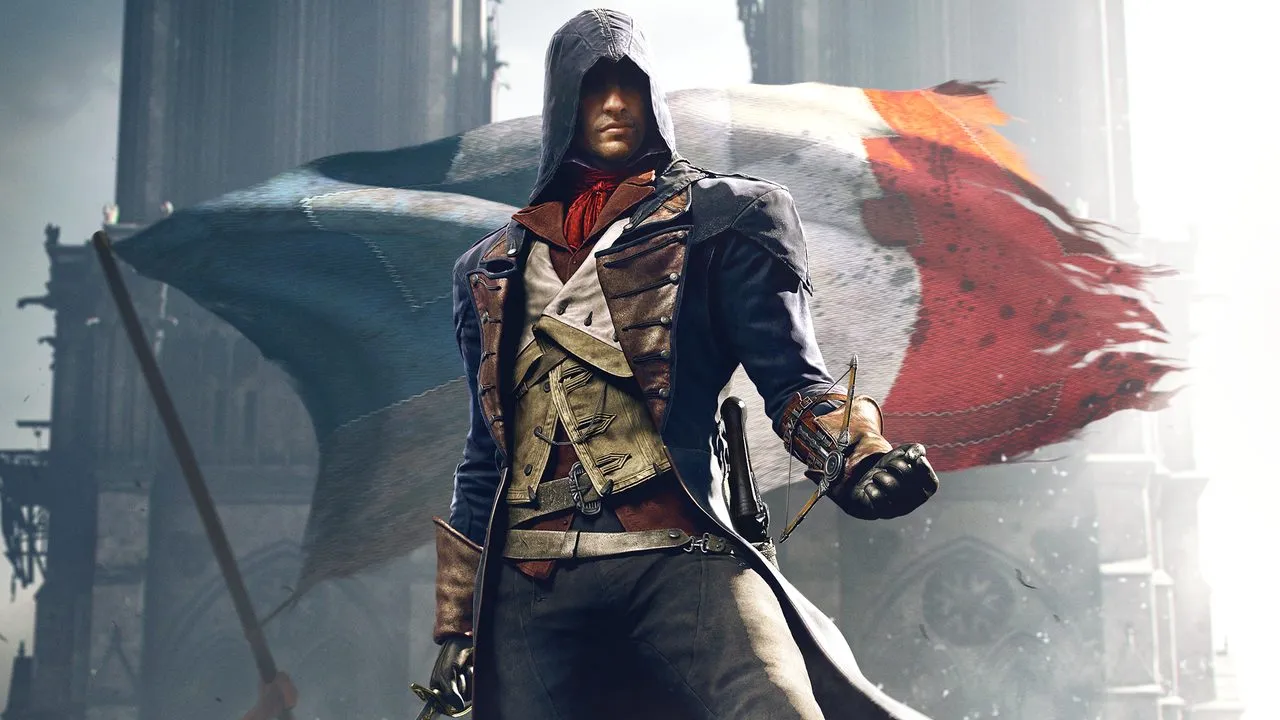
Assassin's Creed Unity is once again at the center of a familiar debate: was it a broken disappointment, or a bold game that arrived before players were ready to appreciate what it was trying to do? A former Ubisoft developer now argues that Unity was one of the most underestimated entries in the series, pointing to its technical ambition, dense recreation of Paris, and more focused design as reasons it deserves a second look. For fans of the franchise, it is a reminder that some games are remembered as much for their launch troubles as for the ideas hidden underneath them.
There are few games in the Assassin's Creed series that inspire as much divided opinion as Assassin's Creed Unity. Mention it in a room full of fans and you will usually get one of two reactions. The first is a laugh and a reference to the infamous launch bugs, strange facial glitches, and performance problems that quickly turned the game into a meme. The second is a passionate defense from players who believe Unity was actually onto something special.
Now, a former Ubisoft developer has added fuel to that second camp.
According to comments reflecting on the game years later, Unity was seen internally as an ambitious project that may have simply tried to do too much at once. That statement alone will not surprise anyone who played it at launch. Unity was clearly built as a showcase for new hardware and a major leap forward for the series. It pushed detailed crowds, dense city design, revamped parkour, indoor exploration, and multiplayer integration all at the same time. On paper, that sounds like the dream Assassin's Creed game. In practice, it meant the team was spinning a lot of plates.
That ambition is a huge part of why Unity remains such an interesting game to talk about today.
Unlike many later entries in the franchise that spread themselves across massive maps, Unity took a more concentrated approach. Its version of Paris was the star of the show. Instead of giving players an enormous checklist across regions and biomes, the game focused on one city and tried to make every street, rooftop, alleyway, and landmark feel alive. That decision gave Unity a distinct identity that still stands out in the series.
Paris in Unity feels dense in a way that few open-world cities do. Crowds gather in huge numbers. Buildings feel climbable with intention. Interiors add texture to missions and exploration. The city is not just a backdrop but the main event. Even players who did not love the story often admit that simply moving through Unity's Paris was memorable.
And then there is the stealth.
For many longtime fans, Unity represented one of the last major attempts to make stealth feel central again. Combat could be dangerous, enemies could overwhelm you, and sneaking through missions often felt like the smartest and most satisfying choice. The movement system, while not perfect, gave players a smoother and more stylish way to flow across rooftops and descend through city spaces. It felt like Ubisoft was trying to refine the fantasy of being an assassin rather than just an action hero with a hidden blade.
That is why some fans still talk about Unity with a kind of wistful admiration. Beneath the bugs and rough edges was a blueprint for a different future of Assassin's Creed.
Of course, none of this erases the game's launch problems. Unity absolutely earned much of the criticism it received at the time. Technical issues were impossible to ignore, and they damaged trust in the experience before many players could appreciate what was working. When a game launches in that state, its best ideas often get buried under frustration, screenshots, and viral clips. That is the risk of aiming high and missing the mark on stability.
Still, history has a funny way of softening first impressions. As the years pass, more players revisit games outside the chaos of release week. They see what aged badly, but they also notice what was ahead of its time. Unity has benefited from exactly that kind of re-evaluation.
It also helps that the Assassin's Creed series changed direction so dramatically afterward. Later entries leaned harder into RPG progression, enormous worlds, loot systems, and broader exploration. Those games found huge audiences, but they also moved away from the tightly designed urban stealth focus that defined earlier entries. For players who miss that style, Unity now looks less like a failed experiment and more like the last big swing at a very specific vision.
That does not mean Unity was flawless or that it would have been hailed as a masterpiece with a smoother launch. But it does mean the conversation around it has matured. People are more willing now to separate the technical disaster from the design ambition. And when they do, they often find a game that was trying to build something more daring than it got credit for.
The big question is whether Ubisoft will ever seriously return to that formula. A denser, more focused Assassin's Creed centered on one city, deeper stealth, and riskier combat still sounds appealing to a lot of fans. There is clearly an audience for that experience, even if modern blockbuster design tends to favor scale over concentration.
In that sense, Unity remains fascinating. It is not just a game remembered for a messy launch. It is also a glimpse at a path the series might have taken. For some players, that makes it one of the franchise's most frustrating what-ifs. For others, it makes it one of its most underrated entries.
Either way, the fact that people are still arguing about Assassin's Creed Unity all these years later says a lot. Truly forgettable games do not get second chances in the public imagination. Misunderstood ones often do.