Marvel Tokon's Deadpool Swaps Smug Jokes for Genuine Fighting Game Love
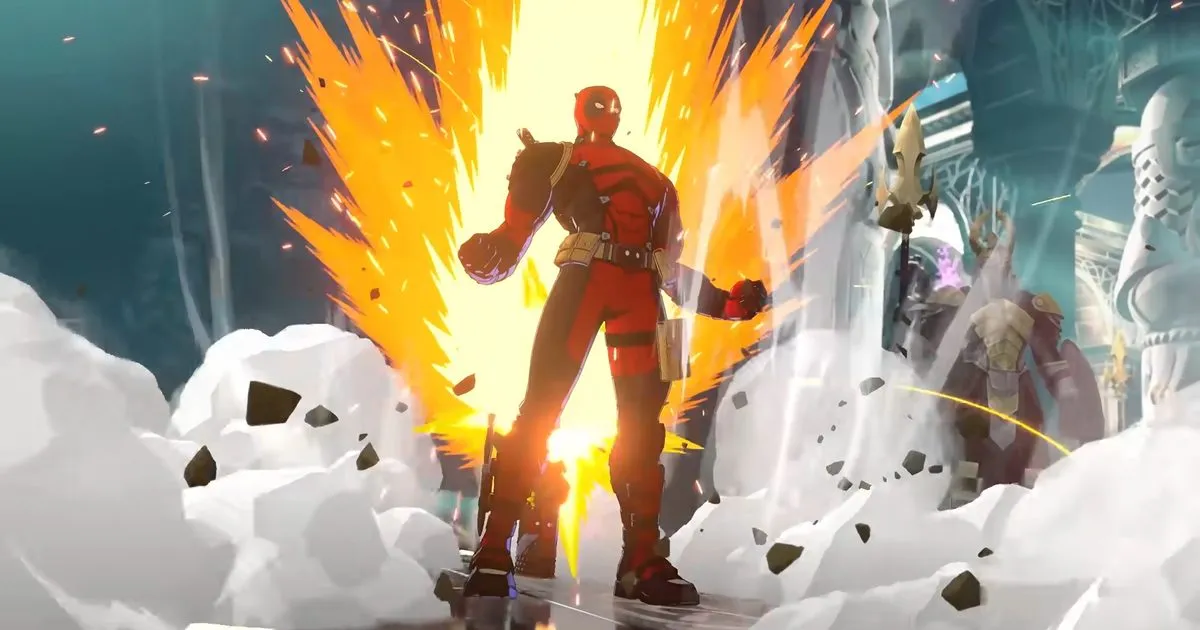
Marvel Tokon: Fighting Souls takes a character who usually grates and makes him work. Instead of a Deadpool who references all media ever made, Arc System Works gives Wade Wilson an encyclopedic knowledge of fighting games, then builds his moveset, voice lines, win screens and supers out of that knowledge. The result reads as affection for the genre rather than smugness about it.
Why Deadpool is hard to write
Deadpool knows he's in a fictional medium and can't stop joking about it. Creator Rob Liefeld intended him to be "Spider-Man, except with guns and swords, and a jackass," and the annoyance is meant to land on the other characters. The X-Men, the Avengers and his enemies are all worn down by his quips and baffling references.
It goes wrong when the audience gets worn down too. High Moon's 2013 Deadpool game is the clearest example: he never stops talking, the references date almost instantly, and the jokes about game and narrative design feel like an excuse for the game's own flaws. Nolan North's take in Ultimate Marvel vs Capcom 3 was still irksome, but it kept its comedy on Marvel and Capcom history, and sometimes on the fighting game community itself, as when he yells "WHERE YO CURLY MUSTACHE AT?" at Magneto.
A strategy guide as a character concept
Tokon brings North back and narrows the focus. Deadpool's in-universe explanation is that he got hold of a fighting game strategy guide, and reading it doubles as his aloof blocking animation. From there he pulls from Street Fighter, Tekken, Mortal Kombat, Marvel vs Capcom, Guilty Gear, Blazblue and Dragon Ball FighterZ, plus deep cuts like JoJo's Bizarre Adventure: All Star Battle and Street Fighter: The Movie: The Game.
Some of the borrowed pieces:
- Cell's intro
- Kazuya Mishima's Electric Wind God Fist
- May's Totsugeki, dolphin included
- E. Honda's butt slam
- Doctor Doom's Foot Dive
- Johnny Cage's nut punch
- Captain Sawada's Hara-Kiri
- Guilty Gear's Roman Cancel, ported over entirely for him
Several of these moves, which the game calls Fourth Wall Attacks, are only available while Deadpool is recovering from damage, self-inflicted or otherwise. That ties them to his healing factor and his willingness to suffer grievous bodily harm. Playing him optimally means hurting yourself on purpose, which runs against standard fighting game design so hard that it suits him perfectly.
The supers carry the jokes
His Deadpool Corps super opens with Sol Badguy's Volcanic Viper, shouted as "AQUATIC VIPER!" because he's swinging a dolphin. Tokon Assemble ends with a simulated opponent ragequit followed by Dio Brando's time stop, and in Japanese Deadpool is voiced by Dio's actor, Takehito Koyasu.
The Fever Dream super has several variations built on references. One has Wade screaming "LET'S GO, WADE!" in his own take on EVO Moment 37. Another recreates Justin Wong's infamous "friend zone" photo, and another has Kazuya dropping his father off a cliff in Tekken. There are more besides.
Reverence over ridicule
What separates this from earlier versions is the direction of the jokes. His fourth-wall-breaking never punches down, or even sideways, and nobody is crudely ridiculed as if the writers sit above it all. Wong may be the exception, though he appears to be handling it well. The overall effect is a run of tongue-in-cheek but affectionate FGC in-jokes, not a reel of smug pop culture references that age badly.
The breadth of fighting game knowledge on display shows real love for the genre, past and present. Deadpool becomes a vessel for Arc System Works to show appreciation for a field it has worked in for decades, while the references are tied into a distinct powerset that respects the character's history on a mechanical level.
It's a big swing, and Arc System Works lands it. For a writer who found Wade's voice as grating as Wolverine does, that makes Tokon's Deadpool the first version in years that's worth listening to.