Casualties: Unknown, Brutal Medical Survival Demo Preview
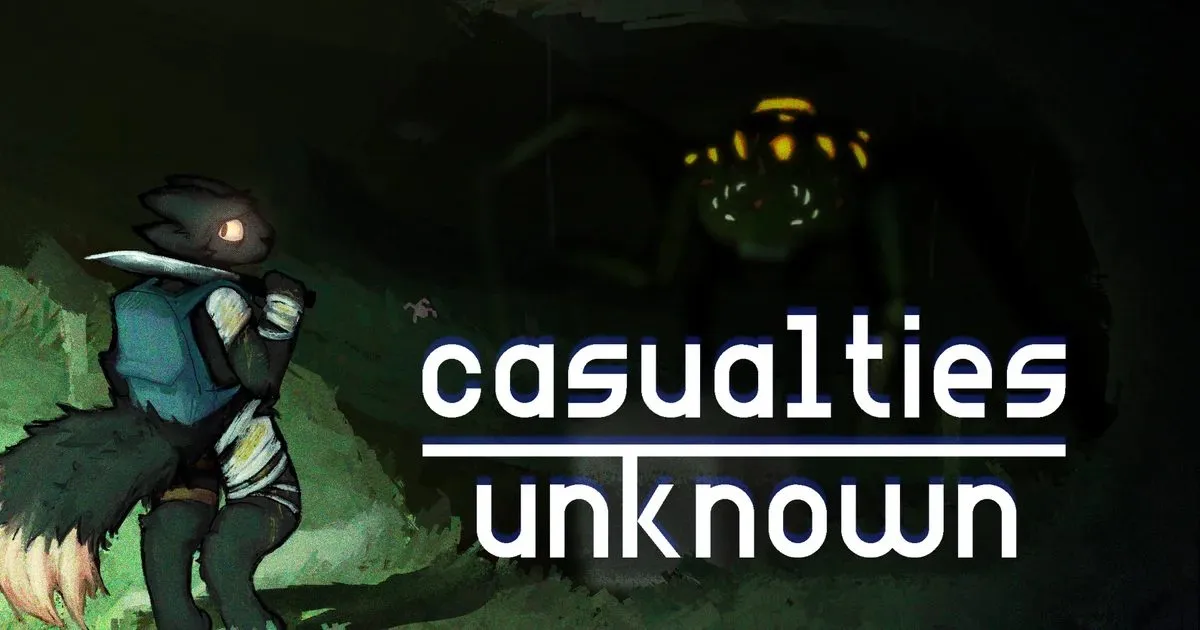
Casualties: Unknown is a punishing, systems-heavy survival sim that puts medical management front and center. The demo delivers a raw, disorienting trek through an alien world where every scrape, fracture, and bout of shock matters, turning basic movement into a tactical decision. It’s grim, meticulous, and fascinating, perfect for players who love learning a game the hard way and living with the consequences.
What is Casualties: Unknown? Casualties: Unknown drops you onto an unfamiliar world sometime in the 2XXXs and asks you to go down, deeper, and then deeper still, through layered biomes riddled with hazards. You’re not a standard human survivor, but a bioengineered, anthropomorphic being built for harsh conditions. Even so, the planet does not care. Gravity is mean, surfaces are treacherous, and the environment constantly prods at your endurance. This isn’t just a “grab loot and move on” sort of survival game; it’s a measured simulation where physics, light, and your body’s limits are all pieces of the same unforgiving puzzle.
A medical sim in survival clothing The medical model is the hook, and it sinks in fast. Where most survival games track a couple of bars, here your character is a layered system of body parts, conditions, and treatments. Cuts, bruises, fractures, shock, bleeding, infections, each can affect specific limbs or regions, and each has its own care routine. The act of stabilizing yourself is tactile and tense: disinfect a wound, wrap a limb, splint a break, monitor for side effects, and make judgment calls about when to rest versus when to push on.
The little moments land hardest. Realizing you used too much bandage because you wrapped hastily. Checking your condition readouts, then deciding which limited supplies to spend. Weighing whether to risk a long drop for a faster route when you know you’re a stumble away from passing out. The game sells the fantasy of being your own field medic, not via text pop-ups, but through play, mini-challenges that force you to engage with each injury, not just acknowledge it.
Systems upon systems Beyond the body horror of survival, there’s a tinker-friendly layer of simulation:
- Physics-driven traversal makes momentum and positioning matter as much as your inventory.
- Lighting feels like a resource; darkness is not just atmosphere but risk.
- Gathering, crafting, and tool use each come with their own friction and mini-interactions.
- Locks and devices often gate progress behind quick, skill-based puzzles rather than simple key items.
None of this leans on automation. It’s deliberate and slower-paced, asking you to inhabit the avatar’s role with care and patience. If you enjoy figuring out how pieces interlock, how one tool replaces three others, how a single shortcut saves crucial resources, the demo rewards that brain space.
Pain, pressure, and the learning curve Expect a steep learning curve. Early mistakes cascade: a bad fall leads to a limp, the limp slows your reactions, delayed treatment invites infection, and suddenly a routine descent becomes an emergency triage session. The game communicates distress through more than just icons; audiovisual cues push you into the headspace of a survivor under duress. It’s not mere edge-lord spectacle, it’s the design speaking. When the world blurs or constricts around you, it’s because your character is not okay, and you need to decide what “okay enough to continue” looks like.
Is it punishing? Yes. But it also feels fair in that classic immersive-sim way: you’ll know why something went wrong, and you’ll carry that lesson into the next attempt. The demo’s greatest victory is how it turns suffering into signal. You don’t need a tooltip to explain that sprinting on a bad leg is a bad idea; the controls, feedback, and friction teach you that through feel.
Atmosphere without melodrama Even with a sparse narrative setup, the mood is thick. The planet’s layers feel purposely arranged to test different failure modes: heights, tight passages, unfamiliar devices, environmental hazards. There’s a clinical coldness to the interface that fits the bioengineered-protagonist angle, and the tone leans somber without getting theatrical. The result is a grim but compelling loop: scout, plan, attempt, suffer, adapt, repeat.
Who is this for?
- Players who love physics-heavy roguelikes and emergent chaos.
- Tinkerers who enjoy systems talking to each other more than scripted set pieces.
- Fans of immersive sims who want grounded, tactile problem-solving.
- Survival enthusiasts who appreciate high-stakes resource and health management.
- Anyone intrigued by medical gameplay that’s more than a medkit button.
Practical tips from the demo Not spoilers, just mindset guidance to help the game shine:
- Respect verticality. Treat every fall as a potential run-ender until you understand the margins.
- Stabilize immediately. A minor injury managed early is far cheaper than a crisis later.
- Pack redundancy. Two small tools that overlap can be safer than one specialized gadget.
- Move with intent. Rushing multiplies mistakes; slow is smooth, smooth is alive.
- Read your body. Status cues matter more than any single meter.
Content warning The demo includes intense depictions of injury and distress, and it does not shy away from making you sit with those sensations. If you’re sensitive to medical trauma, pain, or grim survival scenarios, approach with caution. The game is unflinching by design.
Final thoughts Casualties: Unknown’s demo left me battered, curious, and impressed. It’s a rare survival experience that commits fully to its medical simulation premise and then makes that commitment fun, if your definition of fun includes sweating every step and celebrating the smallest victories. If you’ve been waiting for a survival sim that replaces convenience with consequence, keep this one on your radar. It’s not gentle, but it is honest, and that honesty makes the pain meaningful.