Xbox First-Party Studios Team Up for Project Helix, Blizzard Assists Fable
Xbox is doubling down on collaboration with Project Helix, a unified push that brings first-party studios closer to the hardware team as work ramps up on the next-generation Xbox. Internal teams across Xbox Game Studios, Bethesda, and Activision Blizzard are already exchanging talent and tech: Blizzard’s renowned Cinematics group is pitching in on Playground’s Fable reboot, while Rare is supporting Double Fine on its pottery-focused project, Kiln. With early developer involvement, a long-term partnership with AMD, and alpha hardware expected in 2027, Project Helix signals a coordinated strategy designed to deliver more consistent quality and faster iteration across Xbox’s ecosystem.
What is Project Helix?
Project Helix represents Xbox’s effort to align game development, publishing, and hardware much earlier in the console lifecycle. Instead of developers waiting for finalized specs, teams are being looped in during the vision and planning phases. That early access helps shape both the silicon and the software, making it more likely that launch-window games feel at home on the new hardware from day one.
Crucially, this is not just about the next box. It’s about workflows, shared tools, and long-term tech bets that can ripple across multiple studios. With so many internal teams, roughly 30 under the Xbox umbrella, the company is aiming for a playbook where ideas, pipelines, and learnings cross-pollinate without flattening the unique flavor of each studio.
Cross-studio help in action
Two collaborations stand out as signals of how this approach is already working.
-
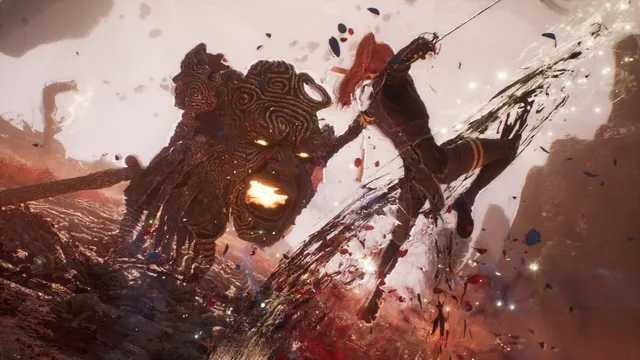
Blizzard Cinematics x Fable: Playground Games’ Fable reboot is getting help from Blizzard’s world-class cinematic experts. That likely means stronger storytelling cuts, crisper visual direction in narrative moments, and improved technical handoffs between gameplay and pre-rendered scenes. Think fewer seams and more flow.
-
Rare x Double Fine on Kiln: Rare’s support on Double Fine’s pottery title speaks to Xbox’s willingness to lend specialized skills where they’ll have the most impact. Rare knows whimsical worlds and tactile gameplay; Double Fine knows quirky mechanics and character. The shared DNA here could smooth development and sharpen the game’s identity without forcing either team to compromise its voice.
The philosophy behind these pairings is “culture of cultures”: connect teams just enough to swap expertise and avoid redundant problem-solving, but not so much that studios lose what makes them special. Expect to see more targeted team-ups like these as projects move through production and polish.
Why this matters for players
-
Better launch games: Early hardware access means developers can optimize sooner, test performance targets earlier, and reduce last-minute compromises that sometimes plague launch lineups.
-
Consistent polish: Shared animation pipelines, cross-studio shader libraries, and standardized performance budgets help raise the floor on visual and technical quality.
-
Faster iteration: If a breakthrough in one studio’s tooling makes character rigging, audio mixing, or streaming tech more efficient, that win can travel quickly across other projects.
-
Identity intact: Xbox leadership is framing this as connective tissue, not creative control. The goal is to empower teams, not homogenize them, and that matters for fans who love their studios’ distinct vibes.
Next-gen direction and tech hints
Xbox’s VP of Next Generation recently pointed to a player-first design with high performance as a core pillar, underlined by a multi-year agreement with AMD. That’s a familiar, sensible bet: tight hardware–software coordination with a single silicon partner can unlock deep optimizations.
There’s also an acknowledgement that traditional rendering tricks are nearing their limits. To push fidelity and performance forward, expect Xbox and AMD to invest in new methods, smarter upscaling, improved ray tracing approaches, and potentially more pervasive use of machine learning inference. The specifics will come later, but the intent is clear: squeeze more visual richness without sacrificing responsiveness.
Alpha versions of the console are slated to reach developers in 2027. That timeline gives teams multiple years to prototype, profile, and refine content in lockstep with evolving hardware. If history is any guide, those early kits will iterate rapidly, and studios closest to the metal will feed back requirements that shape the final spec.
Fable’s renewed momentum
Fable is one of Xbox’s most cherished franchises, and Playground’s track record with open-world craft and technical polish sets a high bar. Blizzard Cinematics joining the effort doesn’t just mean flashy trailers; it could help unify narrative beats, tighten pacing, and ensure cinematic moments blend naturally with gameplay.
Fans should look for:
- More cohesive storytelling sequences that complement Fable’s humor and heart.
- Elevated character presentation, from facial animation to shot composition.
- Smoother transitions between gameplay and cinematics, with fewer immersion breaks.
None of this replaces the core of what makes Fable “Fable”, playful choices, charming towns, and a cheeky tone, but it can amplify the magic around it.
What to watch next
Over the next couple of years, watch for signals that Project Helix is paying off:
- Dev diaries and showcases highlighting shared tools and co-development wins.
- Tech talks about rendering pipelines, ML-assisted features, or streaming improvements aligned with AMD’s roadmap.
- Playtests and demos that emphasize smooth frame pacing, stable performance targets, and quick load/respawn loops.
- Cross-studio credits and acknowledgments becoming more common across Xbox releases.
For hardware specifics, patience will be key. Early disclosures tend to focus on philosophy and partnerships; concrete specs usually firm up closer to final dev kit distribution. Still, the shape of things is visible: tight silicon collaboration, ambitious rendering goals, and a development model built to de-risk launch software.
The bigger picture
Collaboration at this scale isn’t easy. It demands strong leadership, clear communication, and guardrails that prevent creative flattening. But when it works, players feel it: better stability on day one, fewer dips in the middle of a generation, and shared technical leaps that raise the bar across multiple series.
With Project Helix, Xbox is betting that early alignment and targeted studio pairings will turn its size into a real advantage rather than a coordination headache. If Blizzard’s cinematic prowess helps Fable sing, and if Rare’s touch can make Kiln more delightful, that’s the model in micro: the right help, at the right moment, in service of games we can’t wait to play.
Key takeaways
- Xbox is aligning first-party studios and the hardware team early through Project Helix.
- Blizzard Cinematics is assisting Playground’s Fable, and Rare is supporting Double Fine on Kiln.
- A multi-year AMD partnership underpins the next-gen push, with new rendering approaches on the horizon.
- Alpha hardware is expected in 2027, giving teams time to tune games to the platform.
- The goal: faster iteration, higher polish, and preserved studio identities across a very large portfolio.