Sunday Papers: Amazon’s AI Game Cancelled, Crimson Desert Birdwatching & More

This week in gaming culture, the conversation swings wildly between corporate AI ambitions, delightfully wholesome birdwatching in fantasy worlds, and the strange joy of discovering how games constantly overlap with music, hobbies, and everyday life. From Amazon’s reportedly troubled AI-driven project to Crimson Desert players turning into amateur ornithologists, there’s plenty here that shows just how odd, messy, and charming the gaming landscape can be.
Sundays are often the perfect time to slow down and catch up on the stranger corners of gaming news. Not just the headline-grabbing announcements, delays, and studio closures, but the stories that reveal something deeper about the medium and the people around it. Sometimes that means peering into the machinery of the industry. Other times it means appreciating how players can turn a tiny side feature into an entire community obsession.
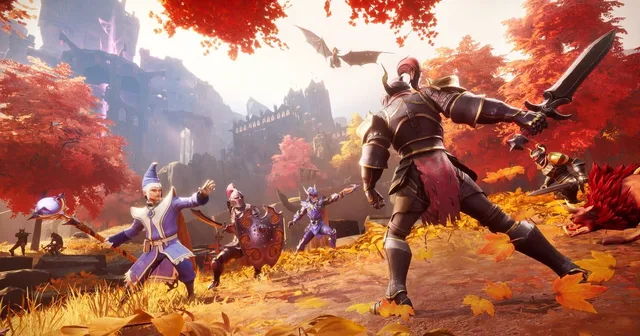
One of the biggest talking points this week is Amazon’s cancelled game project that reportedly leaned heavily into generative AI. On the surface, it sounds like another story in the growing pile of tech-meets-games experiments. But the more interesting part is what it says about top-down decision making in huge companies trying to force innovation on creative teams.
The reports around Amazon’s cancelled project paint a picture that will feel familiar to anyone who has watched a major publisher chase trends without a clear vision. AI is the buzzword of the moment, and executives across industries seem desperate to wedge it into products whether it meaningfully belongs there or not. In game development, that creates a huge tension. Games are already difficult, expensive, and chaotic to make. Adding a mandate to incorporate large language model tech into the heart of a project doesn’t magically solve that. If anything, it can make an already unstable process even shakier.
What stands out most is not just that the project was cancelled, but that it seems to have shifted shape repeatedly during development. That kind of genre-hopping and reinvention is often a warning sign. It suggests a project searching for an identity instead of building toward one. Tossing AI-generated dialogue into the mix may have sounded futuristic in a pitch room, but futuristic ideas alone don’t make a compelling game. Players can smell when a game is built around a concept slide instead of a creative core.
There’s also a broader anxiety in all of this. Developers are right to be wary of tools and mandates that feel less like support and more like replacement theater. Even when AI is marketed as an efficiency booster, many workers hear a different message underneath: do more, with less, and maybe eventually with fewer of you. That unease matters. Games are made by people, and if the people making them don’t believe in the direction, it’s hard to imagine the final product landing with confidence.
Thankfully, not every story this week is about boardroom confusion. On the other end of the emotional spectrum is Crimson Desert, where players have apparently become obsessed with birdwatching thanks to the addition of a bird feeder. That is an incredible sentence, and also a perfect example of why game communities are never predictable.
You can spend millions building combat systems, cinematic set pieces, and sprawling questlines, and players may still decide their favorite thing is quietly spotting birds in the wilderness. Honestly, that rules. There’s something deeply lovable about a community latching onto a peaceful, almost accidental pastime in the middle of what is otherwise a dramatic open-world adventure. It speaks to one of the greatest strengths of games: they create spaces where players can invent their own meaning.
Birdwatching in a game might sound like a joke at first, but it taps into something real. Plenty of players love games not just for challenge or spectacle, but for atmosphere. A living world invites curiosity. Once players start sharing locations, comparing sightings, and celebrating tiny discoveries, the game becomes more than content to consume. It becomes a hobby space. A social ritual. A weird little club.
And who knows? Maybe a few players really will end up taking that interest offline. Games have always had this strange ability to nudge people toward new passions. Cooking, fashion, music history, motorsports, mythology, architecture, photography, even gardening: all of these have found their way into players’ real lives through digital worlds. Sometimes all it takes is one lovingly designed side activity to flip a switch in someone’s brain.
That crossover between games and the rest of culture comes up again in the week’s more reflective pieces, especially around music. There’s a particular pleasure in reading about someone’s personal search for a song, an album, or a scene that mattered to them before it became widely recognized. Gaming and music have always shared that same emotional circuitry. A track attached to the right game moment can lodge itself in your mind for years, and certain eras of games are impossible to separate from the sounds surrounding them.
For many players, music isn’t just background dressing. It’s part of the texture of memory. Mention a late-90s trance anthem, a Dreamcast-era menu, or a handheld rhythm game and you can instantly summon an entire mood. That kind of cultural overlap is one of the reasons gaming coverage is at its best when it stretches beyond review scores and patch notes. The medium doesn’t live in a vacuum. It brushes up against club culture, internet communities, personal nostalgia, and all kinds of niche fascinations.
That’s what makes a roundup like this so enjoyable in the first place. Yes, there’s serious news here. The Amazon story is a reminder that giant companies can still misunderstand how creative work actually functions, especially when chasing the latest shiny tech. But alongside that, there’s room for the lighter and weirder stuff: players becoming virtual bird nerds, writers following musical rabbit holes, and the comforting reminder that gaming culture is never just one thing.
Some weeks in games feel dominated by layoffs, monetization drama, and corporate jargon. Those stories matter, and they shouldn’t be ignored. But it’s also worth holding onto the smaller, stranger tales. They remind us why people care about games beyond the business side of things. For every grim headline about strategy shifts and failed mandates, there’s another story about players finding joy in a side activity nobody expected to matter.
Maybe that’s the real theme of this week: games are still at their best when they surprise us. Not with buzzwords or executive promises, but with the tiny human moments they create. A failed AI pitch might tell us where the industry is getting lost. A flock of Crimson Desert birdwatchers tells us where players are still finding magic.