Metal Gear Solid 2 at 25: How Kojima Predicted the Age of AI and Fake News
Published today · view counts update daily
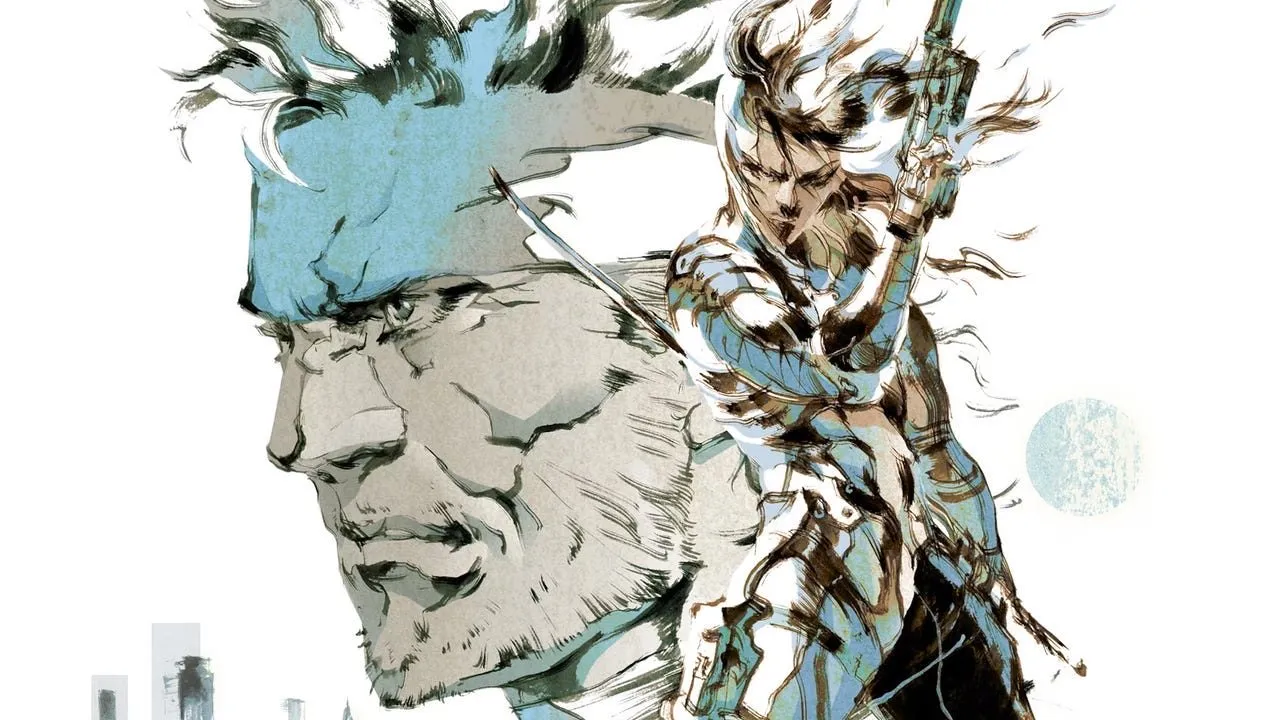
Metal Gear Solid 2: Sons of Liberty turns 25 this year (it launched on November 13th, 2001), and its story about AI-run information control, manufactured reality and post-truth society reads more like a description of the mid-2020s than a PlayStation 2 stealth game. Divisive at launch, the game has aged into one of Hideo Kojima's sharpest works, both for its commentary on the internet and for how it uses game design as part of the story.
A game that confused its audience
MGS2 earned excellent reviews and sold more than seven million copies, but it also drew heated criticism. Many fans were annoyed that most of the game starred newcomer Raiden instead of Solid Snake, and that long cutscenes and Codec calls kept circling philosophical and sociological questions. In 2001, constant internet access was still spreading and nobody knew what it would do to society, so the game's themes were hard to process.
Even three years later the reception hadn't fully warmed. Reviewing Metal Gear Solid 3 in 2004, Ed Lewis wrote that MGS2's story only mattered "unless you really want to spend a couple of late, smoky nights going over the details and putting all the pieces together, and they do fit together. While that's kind of interesting if you want a pleasant mind rutting, it was far from fun to watch a game eat itself."
Time has changed that verdict. Raiden is now widely accepted as a worthwhile protagonist (turning him into a cyborg ninja in Metal Gear Solid 4 certainly helped), and the game's handling of social engineering, digital censorship, cyberwarfare and post-truth culture is a frequent talking point for people who argue games are an art form.
The game that knows it's a game
The setup is simple. After a prologue in which Snake investigates a Metal Gear prototype on a tanker and is presumed dead, Raiden is sent to the Big Shell, an offshore facility seized by terrorists who hold the President hostage. Soon the mission begins echoing Snake's Shadow Moses incident from the first game, down to repeated plot beats, scripted sequences and character appearances.
That repetition is deliberate. The whole operation is an AI-driven simulation run by the Patriots, a shadow group that has covertly steered the US government for decades and has controlled Raiden's life too. His girlfriend Rosemary, who also handles your saves, turns out to be a Patriot agent. Kojima uses this as a metaphor for how players are conditioned by design choices, especially in linear, story-driven games that leave little room to do anything but what the developers intend.
The game keeps poking at its own construction. The Colonel giving Raiden orders is revealed as a Patriot AI. A boss fight on an elevator tries to fool you with a fake Mission Failed screen. Arsenal Gear borrows the look of the first game's VR training missions, and the room where Raiden fights a fleet of Metal Gear Rays seems to stretch on forever. This predates similar attempts by BioShock and Spec Ops: The Line to tie player agency into the narrative.
A prediction that landed
The strongest case for MGS2's foresight is the Colonel's speech near the end. The Patriots, he says, don't censor for power's sake but because society is drowning in "all this junk data preserved in an unfiltered state, growing at an alarming rate." In a world where the internet rewards polarization and insular thinking, "the different cardinal truths neither clash nor mesh. No one is invalidated, but nobody is right." Any social feed or comment section in 2026 makes that hard to dismiss.
The Patriots' anonymity also fits the present. They are nameless and powerful enough to pick a President and shape recorded history, which echoes how powerless people can feel facing faceless corporations and private donors. The system perpetuates itself so thoroughly that it's hard to imagine the world without it, which is why President Johnson insists Raiden keep fighting Solidus even after the deception is exposed: destroying the Patriots could tip the world into chaos.
Generative AI, deepfakes, automated warfare and weaponized social media were all themes the game raised years before they became everyday concerns.
The answer MGS2 offers
The game doesn't stop at diagnosis. It ends with Raiden, who has learned that everything he was programmed to believe was a lie, asking what he should believe in. Snake tells him to "find the meaning behind the words, then decide. You can find your own name, and your own future."
Raiden's decision to take Rosemary back and believe her when she says she truly fell in love with him, spy or not, is the practical version of that advice. However hard the powerful try to steer society, individuals can still decide what matters to them. For a military action game about existentialism, ending with what amounts to "go touch grass" is a very Kojima move, and a message that has only gained weight over 25 years.