Cheap Steam Machine Faceplate Ideas That Actually Work
If you want to give your Steam Machine some personality without spending silly money on custom acrylic or diving headfirst into complicated modding, there are plenty of cheap, weird, and surprisingly effective faceplate ideas that can do the job. From repurposed household junk to convention freebies and snack-based nonsense, the best budget faceplate projects are less about precision engineering and more about creativity, good enough airflow, and the kind of chaotic confidence that defines great DIY gaming setups.
There is a particular kind of gamer logic that kicks in after buying a new bit of hardware. You get the machine home, admire its sleek little shell for roughly ten minutes, and then immediately start wondering how to make it look more like yours. Not better, necessarily. Not cleaner. Just more personal.
That is exactly where the Steam Machine faceplate becomes interesting.
For a lot of compact gaming PCs and console-style boxes, serious internal upgrades can be annoying, expensive, or straight-up impractical. RGB tweaks are fun, sure, but lighting only gets you so far, especially when every setup eventually starts looking like the same neon spaceship cockpit. A removable front plate, though? That is prime territory for budget modding. It is visible, easy to mess with, and forgiving enough that even a wildly stupid idea can somehow become a conversation piece.
The good news is that you do not need a 3D printer, laser cutter, or artisan workshop to make something memorable. You mostly need imagination, a few basic supplies, and the willingness to look at random objects in your home and say, "You know what? That might fit on a computer."
A good starting point is the gloriously simple option: an actual plate. Yes, literally a plate. Something lightweight, cheap, and preferably not treasured by anyone else in your home. The beauty of using a plastic or disposable serving plate is that it already has shape, visual presence, and just enough absurdity to feel intentional. If it bends or folds neatly near the bottom, even better, because that can help preserve access to ports and airflow. Add a marker, a sticker, or a badly drawn face and suddenly your gaming rig looks like it has developed a personality disorder in the best possible way.
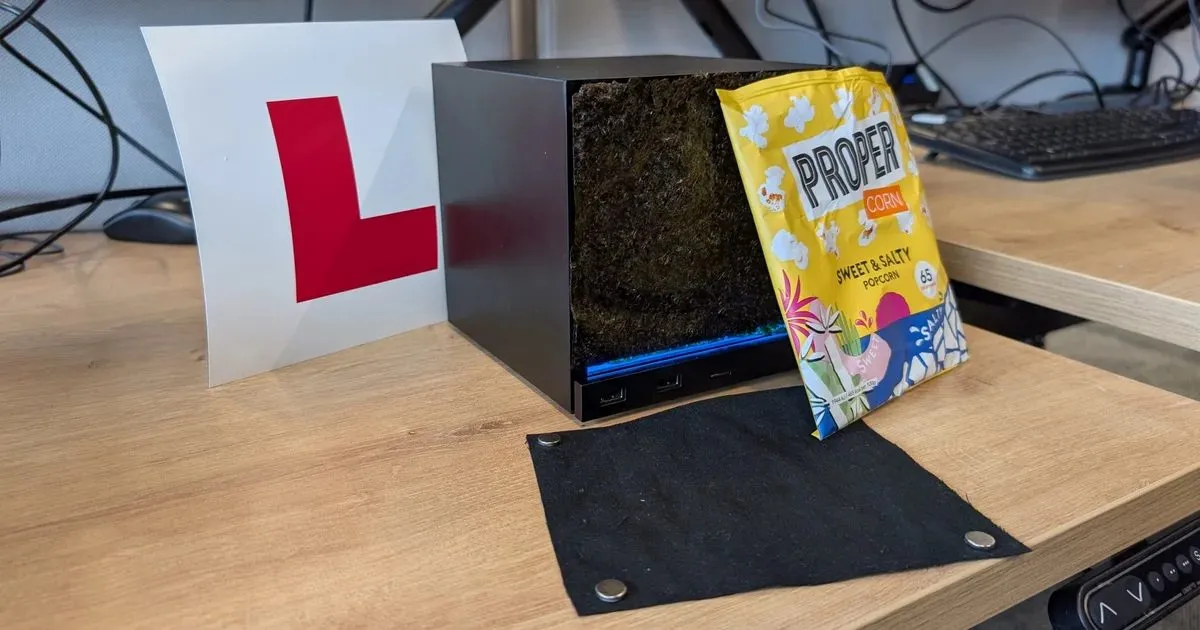
Then there is the surprisingly classy route: thin food packaging materials or textured sheets. Not in a "my PC is now lunch" kind of way, but in a "this surface has more style than it has any right to" kind of way. Anything with an unusual finish, subtle pattern, or natural texture can work if trimmed carefully and mounted cleanly. The trick with this kind of faceplate is restraint. You are not trying to make the machine look expensive. You are trying to make it look deliberate. A simple material choice can go a long way when the rest of the hardware is already minimal and boxy.
Another top-tier budget strategy is cutting up promotional merch you never asked for but somehow still own. Every gamer who has attended an expo, launch event, or store promotion knows the deal. Tote bags, branded sleeves, cardboard inserts, weird synthetic fabric pouches, all handed over with the confidence of premium loot and the actual utility of inventory clutter. Most of it ends up forgotten in a drawer. But slap a logo fragment, bold print, or a striking character design onto a faceplate backing and suddenly your old merch becomes a display piece. It is upcycling, but with significantly more brand confusion.
This works especially well if you lean into irony. You do not need to be the world’s number one fan of whatever logo is on the bag. In fact, half the fun is using something only partially visible, slightly scuffed, or hilariously out of context. A cut-off slogan, a random anime eye, the corner of a collector’s promo printout, these all have way more personality than a sterile blank panel ever could.
Of course, no budget hardware modding discussion is complete without embracing educational disaster energy. Maybe your faceplate material is not elegant. Maybe it is obviously made from an object that should never have touched a PC. Maybe it has the look of a school project completed five minutes before the deadline. That is not failure. That is aesthetic direction.
Brightly colored packaging, oversized letters, old folder plastic, game box inserts, and even junk mail can all become part of a faceplate if you commit hard enough. A bold letter cutout can make the whole setup pop. If one letter carries the wrong vibe, swap it for another and pretend that was always the plan. This is DIY modding at its purest: not perfect, not premium, but definitely yours.
Then we get to the snack-wrapper tier. Is it refined? No. Is it sustainable? Arguably more than throwing it away immediately. Is it funny? Extremely. Clean packaging from popcorn, chips, crackers, or any brightly designed snack can create a weirdly effective collage-style faceplate. The colors are already chosen to scream for attention, which means they naturally stand out against the standard dark shell of a gaming box. If your setup already embraces chaos, this kind of mod fits right in.
That said, there is a difference between "inspired by snacks" and "actively rotting on your hardware." Always clean anything you use. Avoid greasy materials, crumb-heavy surfaces, or anything that traps moisture. The goal is to make your Steam Machine look ridiculous in a charming way, not to turn it into a science experiment.
For actually attaching these faceplates, simplicity wins. Craft magnets are great if the base design allows them, because they let you swap styles without turning every experiment into a permanent life decision. Double-sided mounting tape can also work for lighter materials. Superglue is an option, but only if you are absolutely certain you want to commit, and if you can apply it neatly without fusing your fingers into a legendary relic.
The practical rule behind all of this is straightforward: do not block vents, do not cover important ports, and do not use anything likely to melt, shed, or smell weird under heat. If the machine still breathes and the front panel still functions, you are already ahead of most joke-mod attempts.
What makes cheap faceplate modding so appealing is that it captures a very specific kind of gaming creativity. It is scrappy, a little cursed, and much more memorable than buying a polished accessory off a store page. Anyone can order a custom panel. Not everyone can look at a piece of household clutter and recognize its potential to become the defining cosmetic feature of a gaming PC.
That is the real joy of it. Once you start seeing objects not as objects but as possible faceplates, something in your brain changes. The tote bag is no longer a tote bag. The empty snack packet is no longer trash. The weird plastic thing from the kitchen drawer is no longer mysterious junk. They are all candidates.
And the first step in turning something into a faceplate is accepting one beautiful truth: it no longer has power over you.