Is 8GB VRAM Enough in 2026? Yes, But GPU Makers Need Better
For a large share of PC players, 8GB of VRAM is still enough in 2026, especially at 1080p and in competitive games, but that practical reality does not let GPU makers off the hook for continuing to ship expensive cards with limited memory. Valve’s latest Steam Hardware Survey still shows most users on GPUs with 8GB of VRAM or less, which helps explain why so many games remain playable on that baseline.
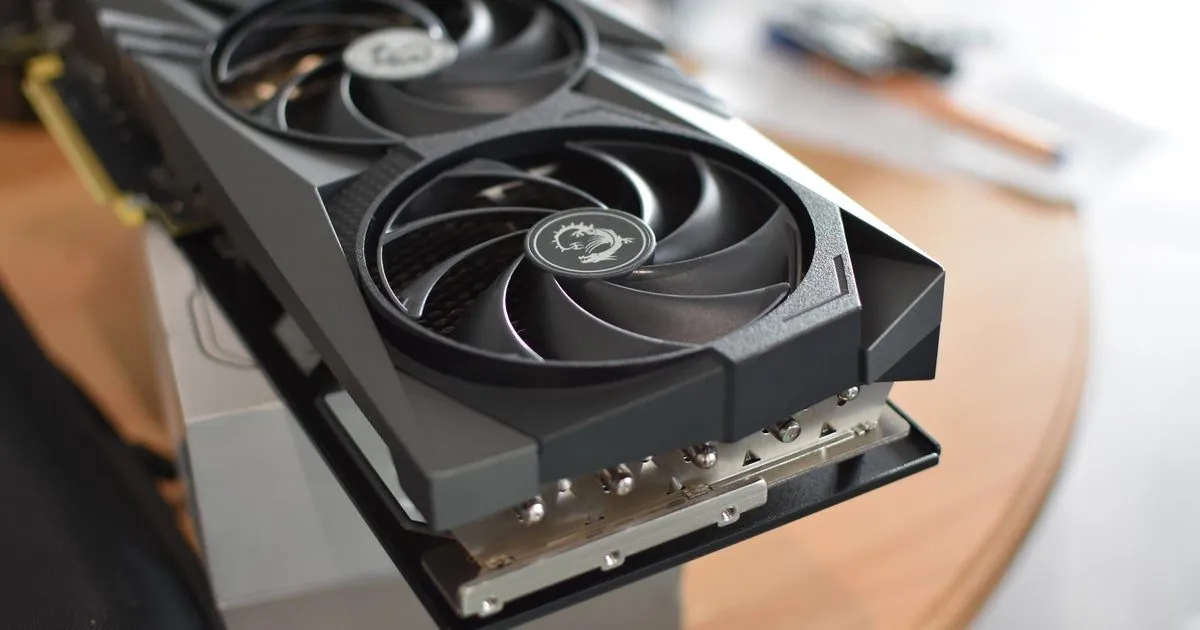
The argument around video memory has become one of the most persistent fights in PC hardware. One side treats 8GB as obsolete on arrival, the other points to the games people actually play and the hardware they actually own. After spending time with an 8GB GeForce RTX 4060 Ti in place of a 24GB Radeon RX 7900 XTX, the answer lands somewhere in the middle: 8GB works, but only if buyers understand the tradeoffs.
Those tradeoffs are easiest to accept in the kinds of games that dominate player counts. Competitive multiplayer titles, popular MMOs, strategy games, indie releases, and older or lighter PC games generally do not demand more than 8GB of VRAM. If your library is built around Counter-Strike, Valorant, Rocket League, simulation games, or management games, VRAM is unlikely to be the first thing that forces an upgrade.
That remains true even when frame rates drop compared with a much faster card. In many cases, upscaling does enough to smooth out the experience, and the visual compromises are modest at 1080p. For plenty of players, that is a reasonable exchange in a market where GPU prices are still painfully high.
The limit shows up much faster in recent big-budget games. Cyberpunk 2077 can push past 8GB once resolution and settings rise, and that tends to bring intermittent stutter rather than a total collapse in performance. Final Fantasy VII: Rebirth is harder on memory at anything above 1080p, again making the issue visible through hitches rather than making the game unplayable. Alan Wake 2 is the clearest example of where 8GB starts to feel restrictive, with memory use spilling into shared system memory and forcing sharper settings cuts to keep things under control.
That distinction matters. “Enough” does not mean ideal, and it definitely does not mean comfortable for every new AAA release. It means a card can still run a broad slice of today’s PC library at sensible settings, usually with 1080p as the target and upscaling as part of the plan. Buyers expecting high settings, higher resolutions, heavy ray tracing, or a long runway before the next upgrade should still look at 12GB or more.
The more important question is not whether an 8GB card can still serve a purpose. It can. The sharper question is why buyers are still being asked to accept this amount of memory in new hardware that often carries inflated pricing. Memory adds cost, but GPU vendors also choose where to draw product boundaries, and those boundaries have left too many entry-level and mid-range cards leaning on an aging baseline.
That frustration is why the current debate has staying power. Players are not wrong to say 8GB remains usable, and they are not wrong to expect better from companies selling fresh silicon in 2026. Reports about a possible RTX 50 series refresh suggest more VRAM may be coming to some models, although the rumored changes do not point to a broad fix for the affordable end of the market.
If you already own an 8GB card and it runs the games you care about, there is little reason to panic. If you are buying new, 8GB can still make sense on a strict budget, but only with open eyes. The problem is not that these cards are unusable. The problem is that buyers have been asked to treat “usable” as generous progress.