Best Gaming Essays of the Week: Shooter Trends, Steam Censorship

This week’s standout game writing ranges from a broad discussion of where shooters are heading to reported accounts of how developers struggle to release games with sexual content on Steam. The selection also turns toward visual novel criticism, genre and national identity, and the long-running player society that has formed around No Man’s Sky.
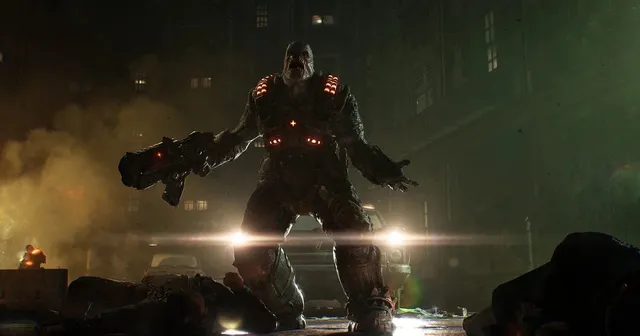
The sharpest anchor is Bullet Points Monthly’s 10th anniversary roundtable, “the state of the shooter in 2026”, which brings together Ed Smith, Reid McCarter, Astrid Anne Rose, Yussef Cole, and a long list of contributors including Kaile Hultner, Autumn Wright, Nick Capozzoli, Cameron Kunzelman, Lewis Gordon, Grace Benfell, Joshua Calixto, Zack Kotzer, and David Wolinsky. The format matters as much as the topic. Instead of trying to force a single thesis onto the genre, the piece treats shooters as a field split between commercial pressure, player habit, and changing ideas about what violence means in games. That makes it more useful than the usual trend piece, because it captures disagreement without flattening it.
Another essential read comes from Aftermath, where Jay Castello examines the frustrating process of publishing games with sexual content on Steam. The piece centers on Meredith Gran’s Perfect Tides, Heather Flowers’ 500 Finger Fillet, and Molleindustria’s Future? No Thanks!, and it lands because it stays close to the practical consequences for developers. Steam’s standards often appear inconsistent, and that uncertainty can become a production problem in itself, especially for smaller creators who do not have the time or money to navigate vague moderation calls.
Jank.cool contributes one of the more unusual criticism picks of the week with Hannah Nicklin’s essay comparing Zachtronics’ Eliza, Jathan Sadowski’s The Mechanic and the Luddite, and Calvin Kasulke’s Several People Are Typing. Nicklin’s pairing is effective because it does not treat games criticism as something that must stay inside games. Putting a visual novel into conversation with a nonfiction study of labor and a contemporary novel opens up a wider argument about work, mediation, and how digital systems reshape human exchange. It is the kind of essay that trusts readers to follow connections across forms rather than stopping at a simple recommendation.
Historical Games Network adds a more academic angle. Will Butler writes about how genre and nationality intersect in marketing, community organization, and criticism. That subject can easily become abstract, but it matters for anyone who has noticed how games are branded differently depending on where they come from and who is expected to play them. Labels that look neutral often carry assumptions about cultural prestige, audience identity, and even what counts as authentic history or design tradition.
The week’s warmest piece is Matt Wales’ feature on No Man’s Sky’s Galactic Hub Project, a player-run research and settlement community that has lasted through a decade of updates. What stands out there is not only the scale of the project, but its persistence. No Man’s Sky has often been discussed through its redemption arc, but the Galactic Hub shows a different story, one about players building institutions inside a game and keeping them alive over years of change. That kind of continuity is rare, and it says as much about community stewardship as it does about Hello Games’ support for the sim.
Taken together, these essays are a reminder that games writing is often at its best when it moves beyond product coverage. The strongest pieces this week ask how genres age, how platforms govern expression, how criticism can connect different media, and how players create social worlds that outlast any single patch cycle.