Valor Mortis Review: A Napoleonic Soulslike With Bite and Balance Issues
Published today · view counts update daily
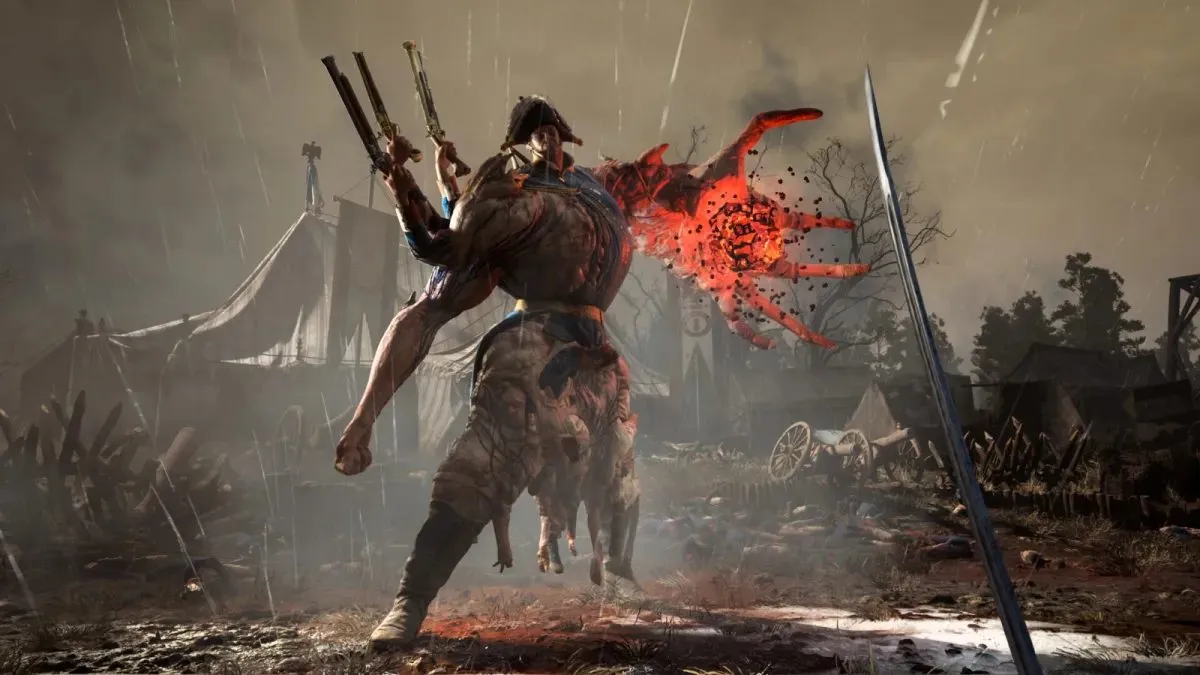
Valor Mortis, the first-person Soulslike from Ghostrunner developer One More Level, mostly succeeds both as a follow-up to that series and as a new entry in a crowded subgenre. Its combat and its nightmarish vision of 18th-century France are the highlights, while a punishing first half and a predictable story hold it back. Over roughly 25 hours, I found a tense, confident game that earns its "one more try" appeal once its difficulty settles.
A dead soldier and a voice in his head
You play William, a soldier in Napoleon's continent-spanning army. He dies, then wakes on a ruined battlefield with the Emperor speaking directly into his mind. From there, William pushes forward at Napoleon's command and gains BioShock-style powers, wielded with the left hand, including fire and time manipulation. The set is small, but it fits neatly around a combat kit built on swords and guns.
By the end you carry multiple firearms, including a pistol and a long-range musket, plus a saber, rapier, or claymore, a shotgun-like blunderbuss, and a pyro hand. Your targets are the zombified remnants of Napoleon's army and the cursed civilians left behind by his war.
The story is easy to follow and far less exhausting than most in the genre, but it doesn't go anywhere surprising. The questions of why Napoleon is in your head, why you can stop time, or what magical agent is reanimating corpses turned out less interesting than the answers my imagination had already supplied. Sidequests add small flourishes of humanity and mystery, though the premise left me only mildly impressed by the end.
Combat that rewards using everything
The genre staples are all present: punishing bosses, a primary currency you drop on death and must recover, and rest points that reset enemies. They pair well with One More Level's first-person combat, which clearly benefits from the Ghostrunner experience.
Parrying is the core skill, though you can block at the cost of some health or dash away. Learning to counter hulking soldiers, zombie dog-things, and lab experiments gone very wrong is satisfying. Setting enemies aflame or freezing them with stasis, which adds explosive effects, mixes well with blades and firearms. It's impossible to finish the game without using every tool, and the studio is plainly confident in what it built.
Traversal sections add wall-running, grappling, pole-swinging, and jumps between shrinking platforms. They bring a rush of speed to otherwise slow, deliberate play. They also reminded me why I prefer Ghostrunner, which is probably an unwanted side effect for the developer.
Where the balance breaks
The first half is the problem. Boss fights should check whether you've mastered your toolkit, but here they often give you no room to learn. A single hit can kill you without showing what you did wrong, and even standard enemies seemed to have random insta-kill moves. I died more than 100 times, and I wish more of those deaths had taught me something instead of just irritating me.
I can't say whether the second half is better balanced or whether upgrades to stamina, health, and weapons gave me the footing I lacked early on. Either way, the game eventually settles into a challenge that rewards persistence, and the lantern you've been begging to find feels earned.
Exploration and the Mice
Valor Mortis keeps pulling you off the main path. There are countless items to find, such as grenades and extra-powerful bullets, plus many minibosses and side quests. Reaching them often means exploring the ruined landscape in ways the critical path never asks. Each chapter moves to a new location that builds on the last while leaving its own mark.
The best storytelling comes through a B-plot about the Mice, orphaned children looking for a different kind of leader after what Napoleon has done to their homes. It is clearly inspired by BioShock's Little Sisters and even includes a deliberately obscured mortality system that affects a few late sequences. It's well done, just not as well as its inspiration. Most of it plays out in side quests, which makes it easy to stumble into.
Verdict
One More Level's first Soulslike falls short of its premise, and the early difficulty is unfair enough to test patience. Once its systems come together in the second half, though, it demands a lot and pays you back with real rewards. It's a confident step into the genre that leans on the studio's earlier expertise, and I'd gladly see this world again.