Starminer Early Access: Physics-Driven Space Logistics Sim to Watch
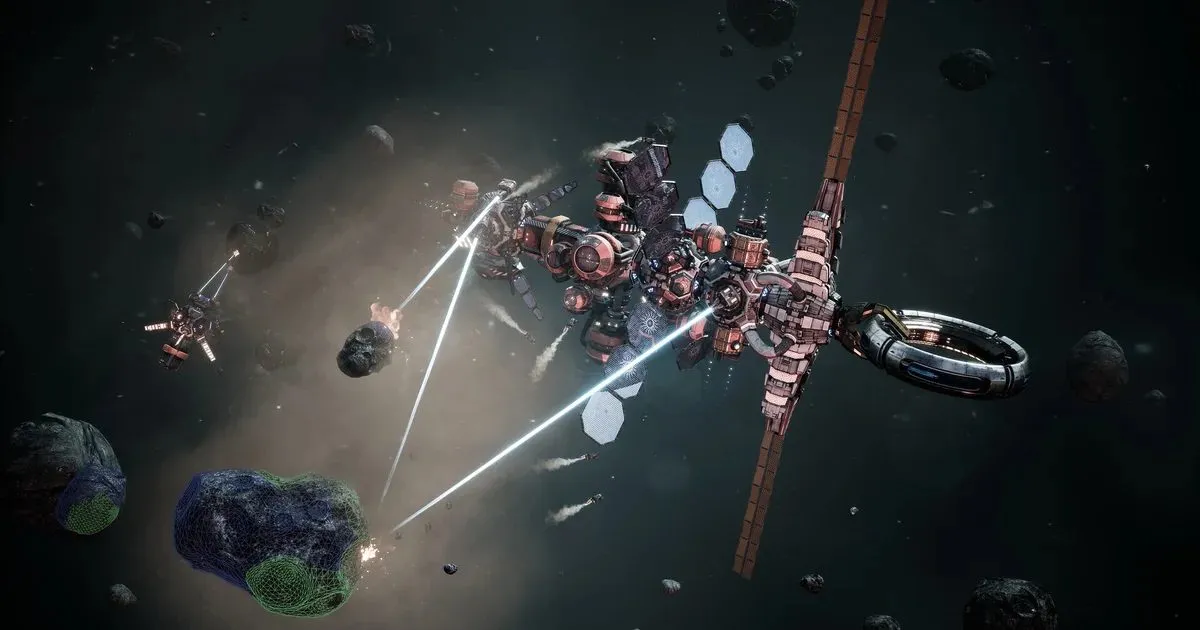
Starminer looks like one of the most intriguing upcoming indie space sims, blending modular shipbuilding, zero-gravity resource hauling, and fully physics-driven logistics into a game that seems built for players who enjoy solving complex problems in the cold vacuum of space. With its striking industrial sci-fi presentation, emphasis on moving cargo in believable ways, and promise of campaign, survival, and sandbox modes in Early Access, this is the kind of niche strategy-simulation hybrid that could quietly become a favorite for anyone who loves turning asteroid fields into efficient profit machines.
There are plenty of space games about dogfights, galaxy-spanning empires, or dramatic story choices. Starminer appears to be chasing a different thrill entirely: the joy of engineering something functional, then watching it work under pressure. That alone makes it worth keeping an eye on.
Developed by Slovenian studio CoolAndGoodGames, Starminer puts a big focus on physics-driven space industry. The hook is simple on paper but wonderfully messy in practice. You build out mining platforms and ships from modular components, carve resources out of asteroids, and then figure out how to move those resources where they need to go. In a genre full of abstracted systems, that physicality gives Starminer a lot of personality.
And honestly, that personality is what stands out first. This is not a sleek heroic space opera. It feels more like blue-collar space engineering with a dangerous edge. Huge industrial structures, reflective panels, drifting cargo, rotating vessels, awkward docking angles, and the constant sense that one miscalculation could turn your supply chain into an expanding cloud of very expensive debris. That kind of tension can make even routine logistics feel dramatic.
The modular construction side looks especially promising. If you enjoy snapping together ships, stations, and mining rigs piece by piece, Starminer seems ready to deliver. Building in six degrees of freedom naturally opens the door to more expressive designs, but it also introduces real hazards. In space, orientation matters. Momentum matters. Distances matter. A badly aligned platform or a clumsy transfer route is not just inefficient, but potentially disastrous.
That’s where the logistics simulation starts to sound really compelling. Instead of resources simply disappearing into a menu and reappearing somewhere useful, Starminer appears to care about how materials physically move through space. Cargo can be jettisoned and collected by traders, opening up a wonderfully risky layer of planning. Do you bring a ship directly into a hazardous zone, or do you send the goods outward and let someone else handle pickup? It’s the kind of system that can create stories on its own.
You can already imagine the chaos. A transfer performed with perfect timing feels brilliant. A transfer performed with slightly less than perfect timing probably becomes a slow-motion comedy of errors involving spinning ore containers and panicked course corrections. Good simulation games thrive on those moments, where success feels earned because failure was always only one bad decision away.
Starminer also seems aware that pure logistics, while catnip for a certain type of player, benefits from external pressure. That pressure comes in the form of escalating danger. As your operation expands and your fleet grows, your heat signature increases, making you more visible to hostile alien forces. That is a smart addition. It means optimization is not just about maximizing profits, but about balancing growth, risk, and defense.
That threat could give the game a satisfying arc. Early on, you are likely focused on scraping together resources and building stable infrastructure. Later, you may be protecting a sprawling industrial network that has become too valuable, and too noticeable, to remain unchallenged. In other words, your success paints a target on your back. That is a fantastic way to keep a management-heavy game tense.
The Early Access launch version is set to include a tutorial, a campaign mode, survival challenges, and a sandbox mode. That is a solid lineup, especially for a game with systems this intricate. A tutorial is essential for something this simulation-focused, while sandbox mode should appeal to players who just want to experiment with ship designs and supply chains without pressure. Survival challenges could be where the game really shines, though, because strict constraints and rising danger often bring out the best in mechanics like these.
The stated plan for the full version is also encouraging. More units, more construction options, a dynamic campaign, and mechanic improvements based on feedback all sound like exactly the right priorities for Early Access. Games in this space tend to live or die by iteration. If the core simulation is strong and the developers respond well to player discoveries, Starminer could evolve into something special over time.
What makes it particularly interesting is how it seems to sit in a sweet spot between hardcore simulation and dramatic emergent gameplay. Fans of space sandboxes and industrial builders often want systems that feel believable, but not so punishing that they stop being fun. Starminer has a chance to hit that balance if it treats realism as a source of memorable situations rather than a wall of frustration.
For players who enjoy the more technical side of science fiction games, this could be a great one to follow through Early Access. There is obvious appeal in the visual spectacle of giant modular rigs floating against a starfield, but the deeper attraction is the promise of meaningful problem-solving. Planning routes, building efficient extraction setups, defending your growing operation, and dealing with the consequences of real momentum and mass could make every session feel like a new engineering challenge.
Most importantly, Starminer already seems to understand its niche. It is not trying to be everything to everyone. It is leaning hard into space logistics, industrial scale, and physics-driven systems, and that confidence is refreshing. For the right audience, moving ore from one precarious machine to another is not busywork. It is the whole fantasy.
If CoolAndGoodGames can deliver a strong onboarding experience and keep expanding the depth of its systems during Early Access, Starminer could become a standout for simulation fans. It may not be the loudest space release on the horizon, but it absolutely looks like one of the more fascinating ones. For players who love turning complicated machinery into smooth, profitable motion, this is a game worth tracking closely.