Godzone 6: Build a Grotesque Mutant in This Deep Sci-Fi Roguelike
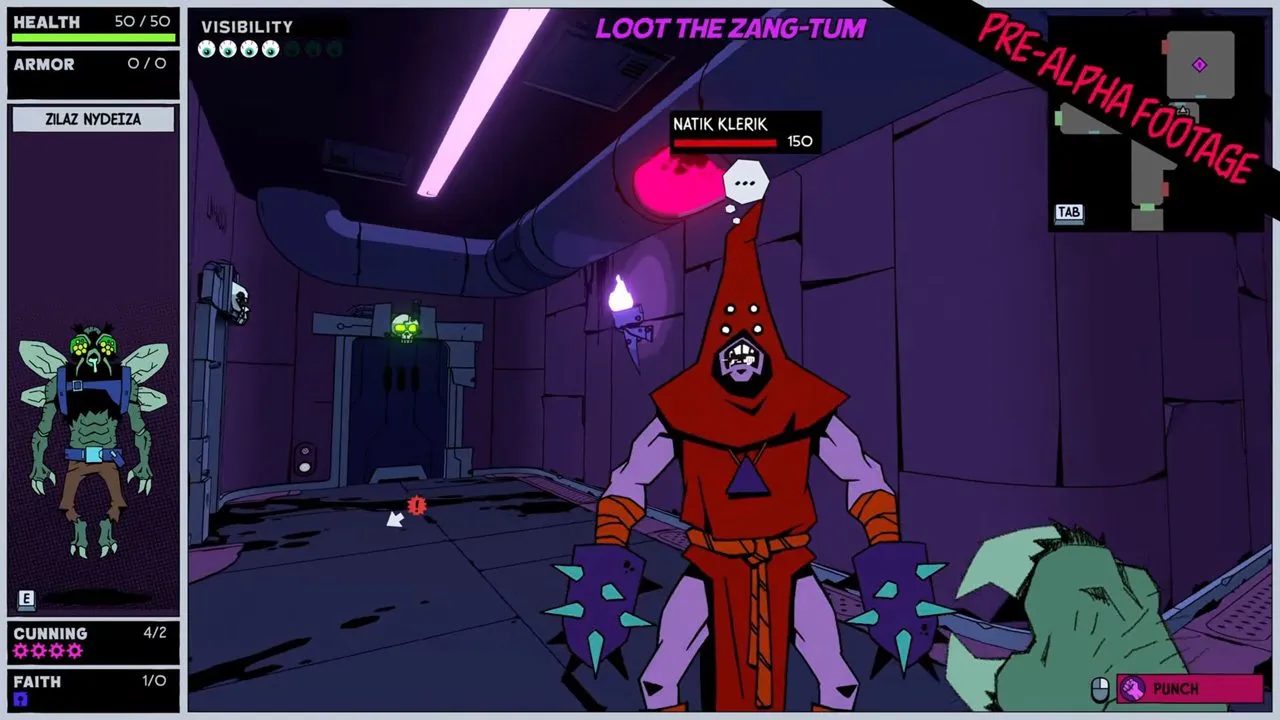
Godzone 6 looks like it could be one of the most exciting indie immersive sims on the horizon, blending roguelike unpredictability with deeply flexible character building in a bizarre sci-fi setting. The big hook is wonderfully weird: instead of creating a standard hero, you assemble a grotesque mutant and survive by leaning into its odd strengths, whether that means slithering through vents, hacking ancient systems, flying over danger, or mutating into something that barely resembles a person anymore. It’s a game built around experimentation, adaptation, and making the most of whatever horrifying form you end up with.
What makes Godzone 6 immediately stand out is how hard it seems to commit to player freedom. Plenty of roguelikes promise build variety, but a lot of them still orbit the same core loop: get stronger weapons, stack better stats, shoot things faster. Godzone 6 appears to be aiming far beyond that. The appeal is not just choosing what kind of weapon to carry, but deciding whether you even want to rely on weapons at all.
That opens the door to the kind of role-playing that immersive sim fans absolutely love. You might become a stealth-focused creature that avoids conflict entirely. You might build around intellect and ancient technology, gambling on the chance that you’ll discover relics you can actually understand. You might invest in physical mutations and turn yourself into a venom-spitting monstrosity that survives through raw biological chaos. The idea of each run nudging you toward a different style is a huge part of the game’s identity, and it sounds like Blue Manchu wants every character to feel like a strange little science experiment.
That concept feels especially strong because the game doesn’t seem interested in handing players total control. Instead, it leans into the roguelike philosophy of adaptation. You work with the options you’re given, not the perfectly optimized build you planned in your head before the run started. That means every mutation choice matters more. It also means failure could feel a lot more interesting. If your mutant ends up weirdly specialized, underpowered in obvious ways, but secretly brilliant in one niche situation, that’s the kind of run people remember.
And honestly, the setting sounds just as compelling as the systems. Godzone 6 is described as a dense, strange sci-fi dungeon where the world is governed by systems that most of its inhabitants don’t understand. That’s a fantastic premise for an immersive sim. It creates mystery without needing to overexplain itself, and it gives every piece of found technology or environmental storytelling a little extra intrigue. The world is not just hostile, but incomprehensible, and that makes exploration feel more meaningful.
There’s also something deliciously old-school about that setup. Fans of games like System Shock 2, Deus Ex, and Thief have always loved worlds that feel layered, mechanical, and slightly indifferent to the player. Godzone 6 seems to be chasing that same energy, but with a mutant roguelike twist. Instead of a fixed protagonist with a familiar toolkit, you’re this unstable biological wildcard trying to survive in a place that barely makes sense.
One of the coolest ideas revealed so far is how movement and body shape affect your options. A snake-like mutant can slip through spaces other characters can’t. A flying creature might bypass hazards entirely. A huge brute may solve problems through force while sacrificing subtlety. That kind of physicality can do a lot for immersion because your build is not just a collection of numbers on a stat sheet. It changes how you actually exist in the world. Good immersive sims thrive on that sort of tangible difference.
The language system is another bold touch. Enemies apparently speak in a kind of invented pidgin, and understanding them may become part of the long-term experience. That’s such a risky, fascinating feature. On one hand, plenty of players may ignore it completely. On the other, it adds another layer of discovery that fits the setting perfectly. If the world is confusing and only partially understandable, then even overheard dialogue becoming meaningful over time is a form of progression. That’s a very immersive-sim move, and it gives the game personality.
Blue Manchu also seems to be treating Godzone 6 as a response to players who wanted a deeper, more systems-heavy follow-up to its earlier work. That could make this a particularly exciting release for fans who enjoy first-person games where poking at systems is as important as combat. It’s not just about reflexes. It’s about curiosity. What happens if you combine this mutation with that relic? Can you sneak around instead of fighting? Can you exploit level geometry because your mutant body works differently from everyone else’s? Those are the questions that keep this kind of game alive.
Perhaps the best thing about Godzone 6 is that it sounds comfortable being weird. Not weird in a superficial, look-at-this-gross-monster way, though it clearly has that too. Weird in a design sense. Weird in the way it mixes roguelike randomness, immersive sim freedom, mutant body horror, language experimentation, and dense worldbuilding into one project. That kind of ambition is rare, especially in a genre space where many games play it safe with familiar templates.
If Blue Manchu can pull it off, Godzone 6 could end up being something special: a game where every run tells a different story, every mutant feels like a bizarre problem-solving tool, and every level offers opportunities you didn’t even realize your build could exploit. For players who love emergent gameplay, strange worlds, and the thrill of making a horrible little creature somehow work, this one should absolutely be on the radar.