Dry Ice CPU Cooling in HP Omen Max 45L Cuts Temps, Barely Boosts FPS
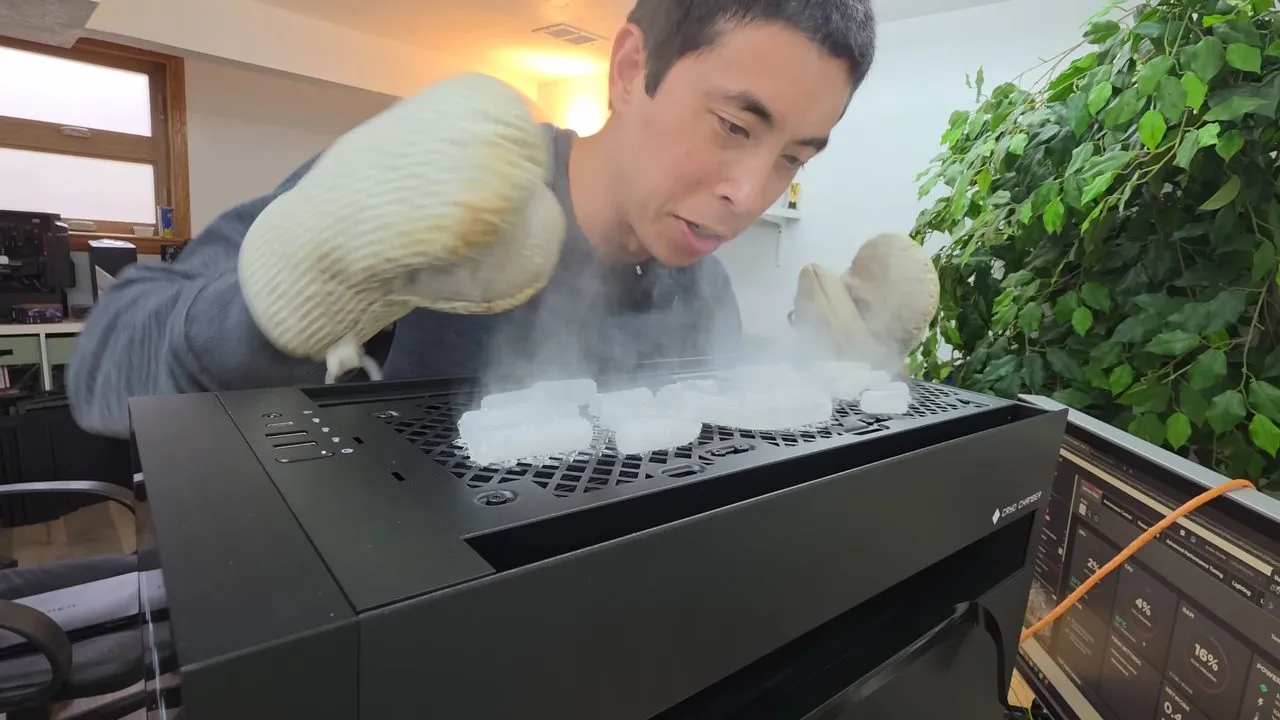
A recent dry ice cooling experiment with the HP Omen Max 45L shows that while extreme cooling can shave several degrees off CPU temperatures, it does very little for actual gaming frame rates. It is a fun hardware stunt, and it highlights the unique design of HP’s Cryo Chamber, but for most players hoping for major performance gains, this frosty mod ends up being more spectacle than breakthrough.
There is something undeniably entertaining about weird PC hardware experiments. Gamers and hardware enthusiasts have always loved the idea of pushing systems beyond normal limits, whether that means overclocking a CPU, building a custom water loop, or trying something so absurd it sounds like a dare. Dry ice cooling definitely falls into that last category.
This latest experiment centers on the HP Omen Max 45L, a gaming desktop that already has an unusual design feature called the Cryo Chamber. Instead of placing the radiator in a typical position mixed in with the rest of the system, HP isolates the cooling hardware in its own upper compartment. That layout turns out to be perfect for a stunt like this, because it gives the experimenter room to blast the radiator area with seriously cold air without directly threatening every other component inside the case.
And that is important, because dry ice is not exactly a friendly material to introduce into a gaming PC. It is extremely cold, it can create a lot of condensation risk, and it is generally the kind of thing that can go from “cool science project” to “why is my motherboard dead?” very quickly. Dropping it casually onto a standard system would be a terrible idea. In the Omen Max 45L, though, the separated chamber at least makes the setup less reckless than it otherwise would be.
The results are interesting, if not exactly game-changing. At stock settings, the CPU reportedly idled at around 43 °C. Using regular ice brought that down to 37 °C, which is already a noticeable drop. Dry ice placed directly on top of the AIO did not do much better, also landing around 37 °C. The real improvement came when the dry ice was positioned in the chamber below, allowing the cooler to pull much colder air upward through the radiator. That setup pushed idle CPU temperatures down further to about 34 °C.
On paper, that sounds impressive. A nearly 10-degree improvement from stock idle temperature is nothing to sneeze at. For anyone who likes watching thermal numbers, there is a certain satisfaction in seeing a CPU run that cool. It also makes the Omen’s Cryo Chamber look like more than just a marketing term. In this bizarre use case, it genuinely helps create a safer and more effective path for extreme cold air to reach the cooling system.
But then comes the question every gamer asks: does it actually make games run better?
That answer is where the whole frozen dream starts to melt a little. In Cyberpunk 2077 testing, the system reportedly scored 157 fps at stock and 159 fps with the dry ice setup. That is technically an increase, but not one that is going to transform anyone’s gaming experience. In practical terms, a two-frame bump is the kind of difference most players would never notice without staring directly at a benchmark chart.
This makes sense if you know how gaming performance usually works. Lower CPU temperatures can help maintain boost clocks, but only if the processor is being limited by heat in the first place. Many modern gaming systems are already designed to operate within safe thermal ranges under normal cooling. If your CPU is not thermal throttling, dropping the temperature further does not suddenly unlock huge reserves of hidden performance. At that point, the system is likely limited by the GPU, the game engine, power limits, or simple silicon behavior rather than raw temperature.
That is why dry ice cooling lands more as a fun experiment than a serious tuning strategy. It proves a point: yes, colder temperatures can help. But it also proves the more important point: gaming performance is not magically transformed just because your CPU feels like it is living in a freezer.
Still, there is value in experiments like this beyond the benchmark numbers. They remind us that PC gaming culture is not just about chasing the most practical upgrade path. Sometimes it is about curiosity. Sometimes it is about seeing whether a ridiculous idea can work at all. And sometimes it is about creating the kind of frosty, vapor-filled spectacle that makes every hardware nerd stop scrolling and say, “Okay, that is actually pretty cool.”
The HP Omen Max 45L also comes out of this looking surprisingly interesting. The Cryo Chamber may sound flashy, but in this case it provided a genuine advantage for a highly unusual cooling test. Most gaming desktops are not designed with this kind of isolation in mind, and that unique internal layout gave the system a chance to shine in a way few prebuilts ever do.
Of course, none of this should be taken as a recommendation for everyday gamers to start shopping for dry ice. It is expensive, inconvenient, short-lived, and potentially dangerous if handled improperly. Condensation alone makes it a risky move around sensitive electronics, and that is before even getting into safe handling requirements. This is not an “easy FPS trick” for your next weekend upgrade session.
The real takeaway is pretty simple. Extreme cooling can lower temperatures, and unusual case designs can create opportunities for some wild experiments. But when it comes to gaming, the gains are often much smaller than the visuals suggest. The HP Omen Max 45L handled the challenge in a way that was impressive from a design standpoint, yet the final benchmark numbers were a reminder that lower temps do not always equal dramatically better performance.
So yes, dry ice made the system colder. Yes, it looked awesome. And yes, it technically boosted fps. Just do not expect your favorite games to suddenly run like they have been overclocked by the power of winter itself.