Vampire Crawlers: Why Sparkles, Sounds and Smashes Make It Shine
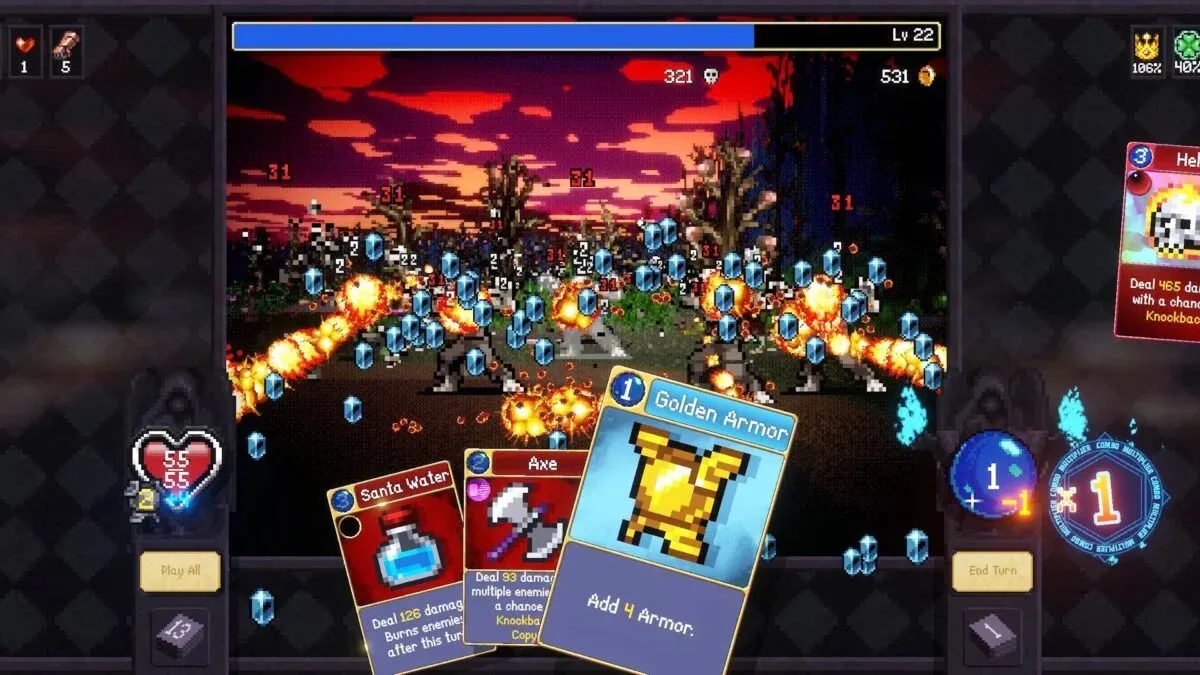
Vampire Crawlers isn’t just a clever first-person deckbuilder; it’s a masterclass in game feel, where sparkles, sounds, and smashable scenery do the heavy lifting to make every minute satisfying. This piece breaks down how its sensory feedback loop elevates deckbuilding decisions, keeps dungeons flowing, and turns small interactions into dopamine fountains you’ll chase run after run.
The first time Vampire Crawlers showers you with confetti-bright loot beams, you realize you’re being taught a language without a tutorial. Colors, particle trails, and icon silhouettes signal what’s worth a detour, which card wants a gem, and when a room is truly cleared. It’s not just pretty, these sparkles steer your eyes and, in turn, your choices.
Let’s talk about that shine. Chests and drops don’t simply “appear”; they announce themselves with a brief light show that’s easy to spot at a glance. It’s a tiny detail with huge impact. In a first-person dungeon where you’re juggling positioning, mana math, and status effects, you don’t want to pixel-hunt for rewards. You want your gaze magnetized toward the good stuff. Vampire Crawlers nails that magnetism. The result is a loop where exploration feels purposeful and energetic, rather than a slow sweep of corners.
Then there’s the soundscape. The game’s audio lives in the perfect space between arcade-y and tactical. Attacks crack with a percussive snap; card activations have distinct timbres; pickups sing in cheery chimes that never overstay their welcome. Most importantly, the audio tells truth. A low, satisfying gulp confirms a resource vacuum. A harder thwack signals a big hit landed. The sum isn’t just clarity, it’s confidence. You trust the game because your ears get the same message as your HUD.
And oh, the smashes. Some games make you press a button and wait; Vampire Crawlers lets you shoulder-check the world like a happy wrecking ball. Breakables crumble with enough oomph to feel physical but not so long that they stall you. That pacing choice matters. In a roguelite where speed snowballs success, shaving friction off micro-actions is design gold. When every crate you collide with might cough up a coin, a heal, or a little surprise, the act of moving is a mini-gamble. It turns traversal into play, not a commute.
Under the hood, you feel thoughtful restraint. The team could have made opening chests a long ceremony; instead, it’s a quick flash-and-fanfare moment that feeds forward momentum. Likewise, damage and status effects don’t drown you in noise. Even the more extravagant spells prioritize readability. When the screen lights up, your next step remains obvious.
That sense of rhythm carries into deckbuilding. Vampire Crawlers rewards synergy, but it makes synergy feel tactile. Slot a gem into a card and you don’t just see a stat bump, you hear metal-on-metal, watch the card settle into place with a chunky flourish, and feel (through timing and pacing) like you’ve strapped a rocket to your build. It reframes optimization from spreadsheeting to smithing. You’re not just making numbers go up; you’re crafting a weapon.
Visual cues also translate beautifully to first-person timing. Cards that apply damage-over-time or shields have unique flares, so you’re not double-casting blindly. Auras read as soft pulses. Direct hits spike bright for a heartbeat. That consistent grammar lets you stack effects confidently. If you’re the type to pilot decks by tempo, buff, debuff, burst, you’ll feel right at home.
What’s especially smart is the game’s respect for flow. If there’s nothing left to do in a turn, it ends for you. If you want to fire off multiple attacks quickly, the interface doesn’t insist on animation-locking you to one action at a time. That’s a subtle gift to players who enjoy “feeling fast,” even in a turn-based space. It keeps the cinematic qualities while preserving your agency, so blitz turns and careful setups both feel equally valid.
There’s also joy in the way Vampire Crawlers invites experimentation with obvious cause-and-effect. You notice early that certain elemental gems amplify particular archetypes. Melee fans can lean into spicy upgrades that create small windows of controlled chaos; control-focused builds can lace their decks with precise stuns and resource returns that ping with crisp little notes. If you’re a Vampire Survivors fan with a soft spot for garlic, you’ll grin when you find similarly satisfying “always-on” vibes here, watching a wall of enemies wilt to a well-slotted combo never gets old. The important thing is that the game sells the synergy with effects you can hear and see, not just numbers on a tooltip.
Even the dungeons themselves get in on the act. Landmarks pop with distinct silhouettes and highlights, helping you orient without needing a minimap obsession. Reward rooms hum with anticipation, small particles dance in air shafts, shiny trims wink from alcoves, and the path forward remains legible through color contrast. It’s art direction doing UX work in the best possible way.
A quick note on difficulty and feedback: When you get tagged by a heavy hit, the response is immediate and honest, bass-heavy, a touch alarming, but not punishingly disorienting. You’re nudged to react, not scolded. That tone matters in roguelites, where runs end often. Vampire Crawlers keeps frustration down by making failure feel like a read error you can correct next time, not cheap trickery.
If you’re just diving in, here are a few feel-first tips:
- Chase sparkles, not corners. Let the game’s visual language guide your route.
- Build around a sound. If a card’s activation noise makes you smile, there’s probably a satisfying engine you can grow from it.
- Break everything you brush past. The cost is near-zero; the payoff stacks.
- Watch for pacing perks. Cards that refund mana or draw based on conditions pair beautifully with the snappy turn system.
- Treat gem upgrades like milestones. The feedback makes them feel big, use that as a mental anchor for your run plan.
All of this lands because the team understands that small sensory wins add up. A glimmer that catches your eye across the room. A chest that crackles like a popper when it opens. A hammer-thunk that makes an upgrade feel permanent. The audible inhale of a room-wide pickup. None of these features would headline a trailer alone, but together they create that elusive “one more run” gravity.
Vampire Crawlers thrives on that gravity. It’s a deckbuilder with teeth because its presentation gives your choices weight and its world begs to be poked, prodded, and, let’s be honest, slammed into. When a game’s sparkles teach, its sounds confirm, and its smashes reward, the result is more than polish. It’s design empathy. It’s the kind of craft that turns good systems into a great time.
So yes, Vampire Crawlers shines because it looks and sounds cool. But the bigger truth is that those cool things are doing important work. They carry information, pace the action, and make mastery feel physical. And that’s why, long after you’ve memorized the cards, you’ll still be grinning every time that hammer comes down.